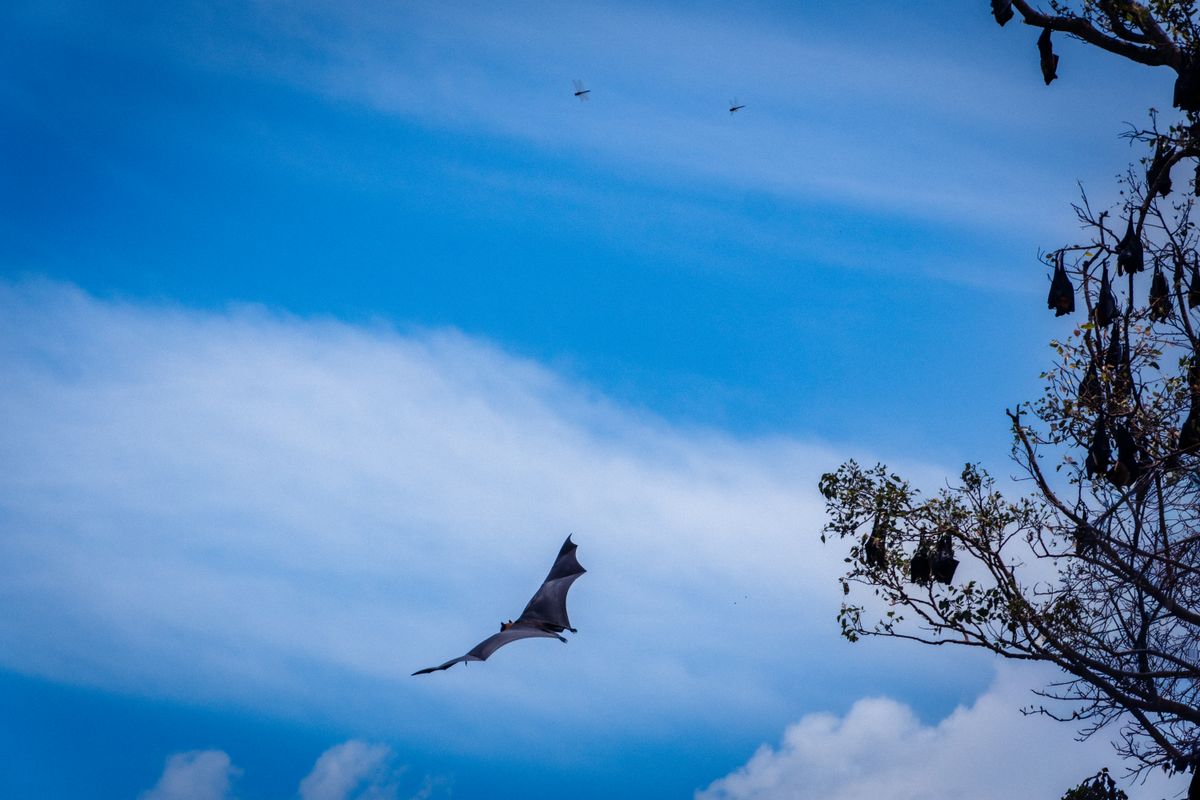
Bat silhouetted against a dusk sky near a residential roofline

Bat Removal & Exclusion

Bat Removal & Exclusion in Savannah, GA

Bats are a common issue in older Savannah homes, where gaps at the roofline, gable vents and soffits can give them access to attics and wall voids. Bat work is different from most other wildlife removal — it often involves exclusion rather than trapping.

That's because bats don't leave the same way other animals do, and sealing them inside a structure is both harmful and counterproductive. The right approach is to let them leave on their own and then prevent re-entry.

What Homeowners Notice

Bat problems aren't always obvious at first. The signs tend to build up gradually as a colony establishes itself.

  • High-pitched squeaking or chirping sounds, especially at dusk and dawn
  • Staining or discoloration near entry points on the exterior
  • Accumulation of droppings (guano) in the attic or near entry points
  • A persistent ammonia-like odor in the attic or upper floors
  • Bats seen exiting the roofline at dusk

Where Bats Are Found

  • Attics — particularly in homes with gable vents or roofline gaps
  • Behind exterior shutters or siding
  • In wall voids near the roofline
  • Under loose flashing or behind chimneys

How Bats Get In

Bats can squeeze through surprisingly small openings — some as narrow as half an inch. In Savannah's older homes, settling and weathering can create gaps that bats can use.

  • Gaps at roof intersections and where the roof meets the wall
  • Gable vents and ridge vents
  • Soffit gaps or loose soffit panels
  • Gaps around chimneys or flashing
  • Cracks in mortar or siding near the roofline

What Bat Exclusion Involves

Bat exclusion is a process, not a single action. The typical approach is to install one-way devices over the entry points that let bats leave at night to feed but prevent them from re-entering. Once all bats have left, the entry points are sealed.

This work requires patience and timing. It's not something that can be rushed, and it's not something that should be done by sealing gaps and hoping the bats find another way out.

Georgia Wildlife Rules & Timing

Georgia wildlife rules can affect how and when bat exclusion work is carried out, particularly during periods when young bats may be unable to fly. Exclusion during these periods can trap young inside, which is both harmful and counterproductive.

This means bat work may need to be scheduled around seasonal considerations. If you're dealing with a bat problem, it's worth asking about timing early — so the work can be done when it's most effective and appropriate.

What Not to Do

  • Don't seal bats inside the structure. They can't get out, and it creates a worse problem.
  • Don't use traps or poisons. Bats are not effectively or appropriately handled that way.
  • Don't attempt exclusion during periods when young bats may be present, unless a professional confirms it's appropriate.
  • Don't assume the problem is solved after bats leave — entry points must be sealed to prevent re-entry.

Savannah & Coastal Georgia Context

Savannah's older homes, with their varied rooflines and aging construction, can offer bats many small entry points. Coastal Georgia's warm climate also means bats can be active for much of the year, making timing an important consideration for exclusion work.

Related

Not sure what you're dealing with? Start here.

Tell us what you've seen or heard. We'll help you figure out what might be happening and what to do next.